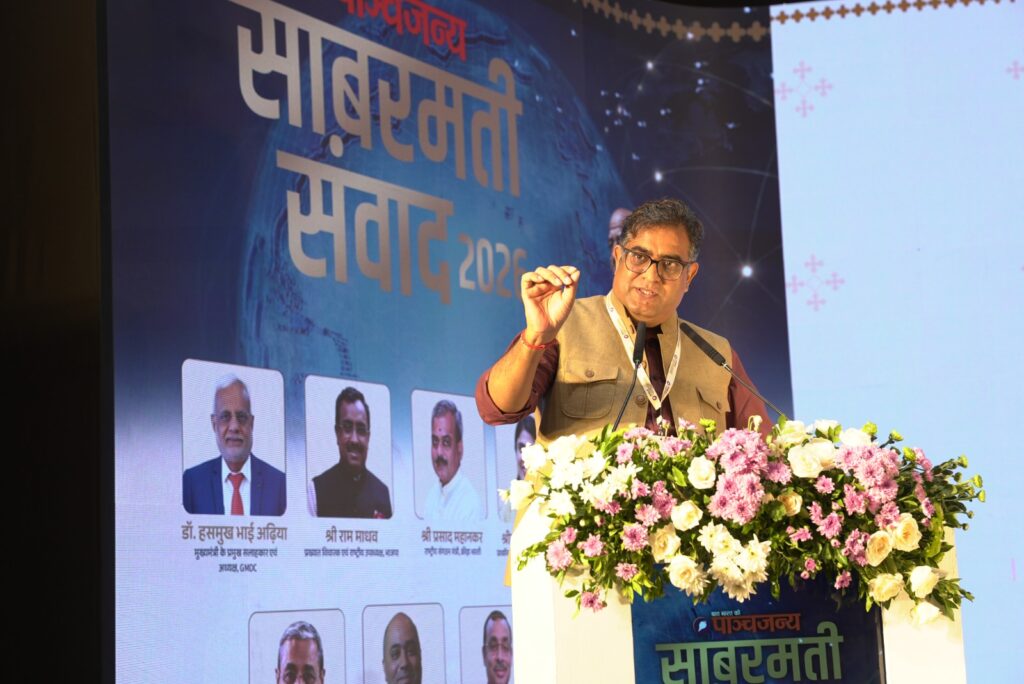
Gujarat:The fifth edition of Panchjanya’s national dialogue series, ‘Sabarmati Samvaad 2026’, was held on September 13, 2026, at the Entrepreneurship Development Institute of India (EDII) in Ahmedabad. The event brought together policymakers, thinkers, social sector representatives, academicians and experts to deliberate on contemporary issues concerning India, its youth and the country’s development journey.
The discussions focused on the participation of youth in the national discourse, along with entrepreneurship, good governance, education, and the ideas and values that have shaped India’s social and intellectual traditions. One of the key highlights of the event was the strong participation of young people. Students connected through universities also showed keen interest in engaging with issues of national importance.
Addressing the gathering, Shri Hitesh Shankar, Editor of Panchjanya, said, “Sabarmati Samvaad has presented a very positive picture of Indian youth. At a time when young people are often associated with ‘disruption’, their participation in this dialogue reflected their willingness to ask questions and seek knowledge. We define generations through labels such as Gen Z and Gen Alpha. However, the Indian tradition has always placed greater emphasis on commonalities than on differences in dialogue. The stories of Nachiketa and Ashtavakra remind us that it is possible to question ideas, seek the truth and maintain respect for others at the same time. Children must learn to ask questions while also remaining rooted in their values.”
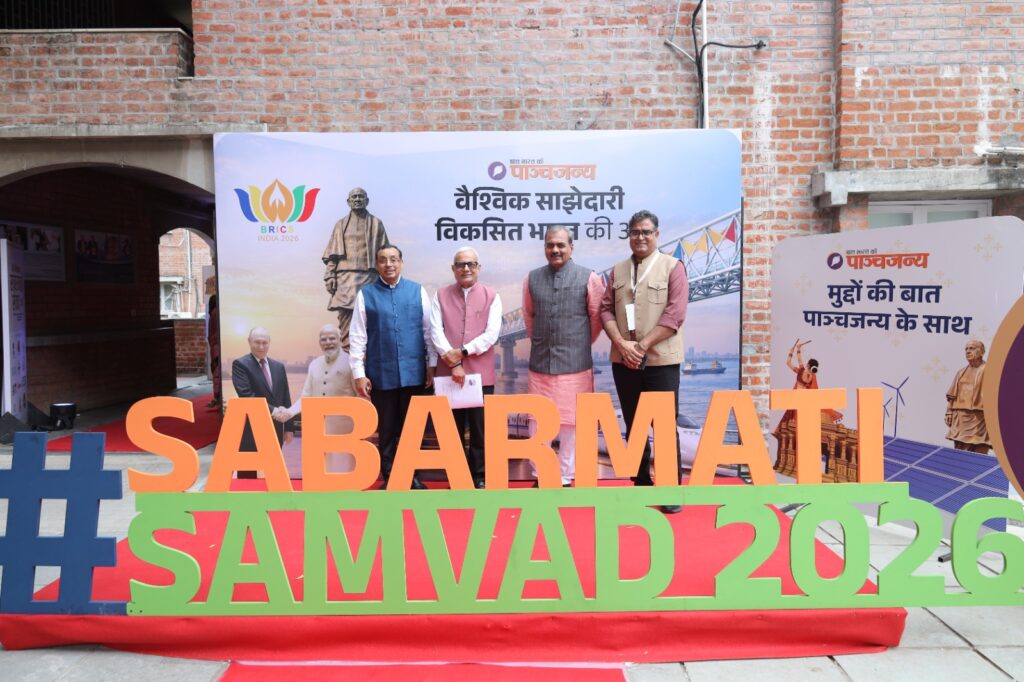
Sabarmati Samvaad also highlighted Panchjanya’s broader initiative to establish platforms for dialogue across different parts of the country. Shri Shankar referred to initiatives such as the Ahilyabai Good Governance Samvaad in Madhya Pradesh, Maa Danteshwari Samvaad in Chhattisgarh, Baat Bharat Ki in Delhi and the Good Governance Samvaad in Jaipur.
The fifth edition of Sabarmati Samvaad witnessed the participation of several prominent personalities. The speakers included Dr. Hasmukh Adhia, former Chief Secretary of Gujarat and former Finance Secretary, Government of India; Shri Ram Madhav, author, thinker and national leader; Shri Prasad Mahanakar, National Organising Secretary, Krida Bharati; Smt. Rivaba Jadeja, Minister of State for Primary and Secondary Education, Government of Gujarat; Shri Parindu Bhagat (Kakubhai), State Vice President, BJP Gujarat; Shri Amitjeet Adarsh, author and analyst; and Dr. Sunil Shukla, Director General, EDII, among other distinguished speakers.
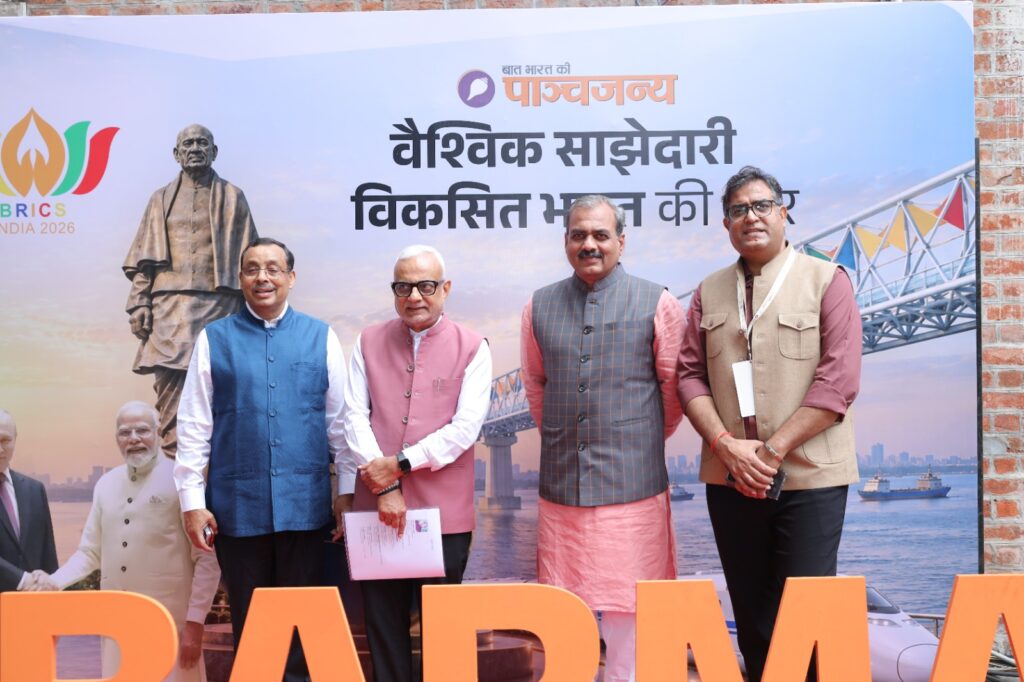
Speaking about the role of youth, Shri Ram Madhav said that young people are not merely beneficiaries of India’s development journey but important agents of change. He called upon the youth to play an active role in shaping the nation’s future by maintaining a balance between India’s traditions and the opportunities offered by the modern world.
Dr. Hasmukh Adhia underlined the importance of youth participation in the context of development and good governance, noting that India’s progress cannot be limited to economic growth alone. Education, skills, responsible citizenship and stronger institutional systems must move forward together. He emphasised the need for young people to become active participants in the country’s development process.
Speaking about the social participation of youth, Smt. Rivaba Jadeja said, “The youth of any country are not only its future but also active participants who shape its present. Platforms such as Sabarmati Samvaad provide young people with an opportunity to listen, ask questions, share ideas and understand their responsibilities towards society and the nation. When curiosity is connected with education, values and purpose, it becomes a powerful force for nation-building.”
The discussions at Sabarmati Samvaad 2026 further reinforced the need to create platforms where young Indians can openly engage with issues related to the development of society and the nation. The programme also highlighted Panchjanya’s efforts to bring relevant national issues to the forefront through dialogue and participation across different parts of the country.
Sabarmati Samvaad concluded with the message that India’s youth must remain curious, ask questions without fear and continue their pursuit of knowledge, while also embracing the values and responsibilities rooted in India’s social traditions. This approach remains an important part of the broader objective of Panchjanya’s dialogue series and its efforts to enrich the national discourse.
About The Author

More Stories
Ahmedabad Centre Delivers Outstanding Results in September 2026 CA Intermediate Examination; 7 Students Secure Top All-India Ranks
IIA Ahmedabad Centre Celebrates Rang Raas ’26 with Grandeur
Every Episode, a New Groom: ShemarooMe’s ‘Haju Vaat Chaale Che’ Premieres 22nd October, Starring Jhanvi Gurnani and Raunaq Kamdar